
Pillar
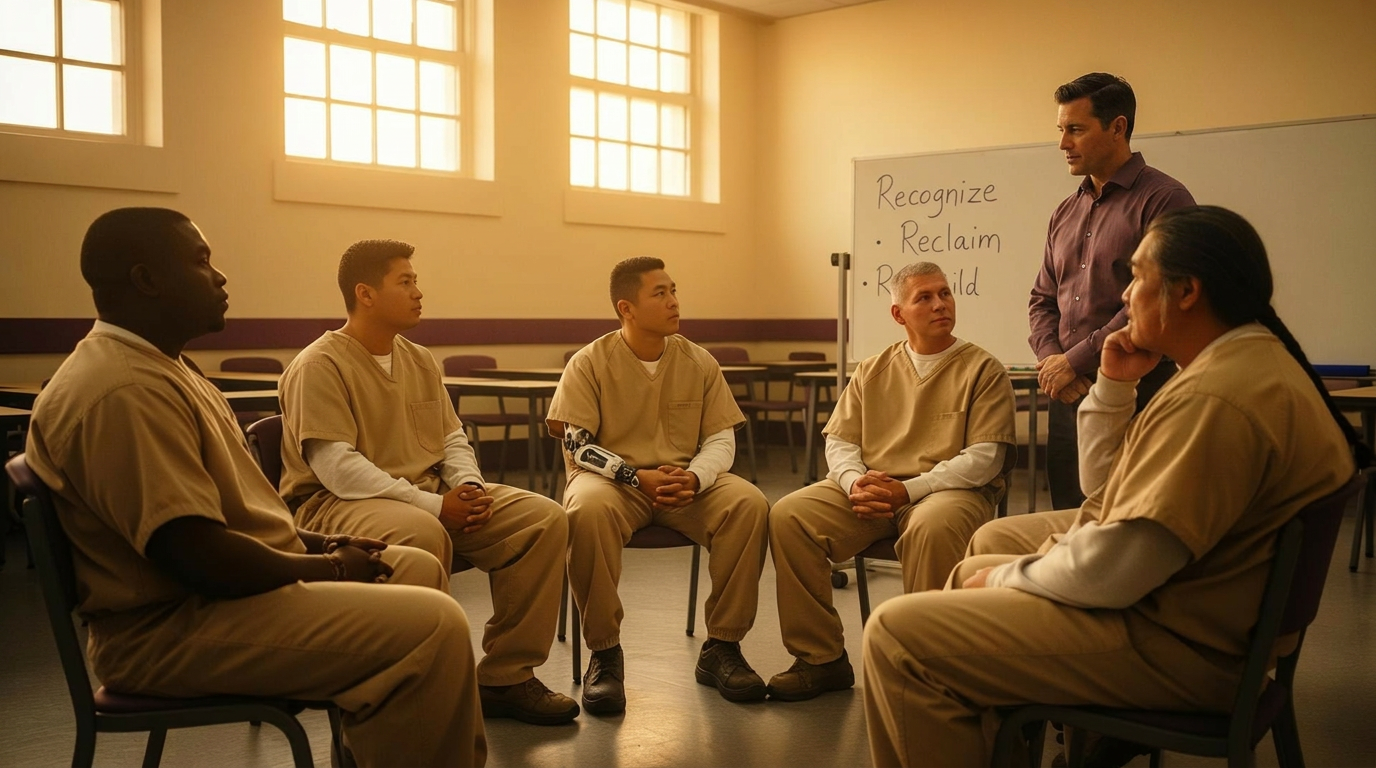
Recognize
Name the invisible wounds — moral injury, PTSD, hypervigilance, survivor's guilt — without shame. Awareness is the first act of strength.
A 90–120 minute evidence-based experience for veterans, incarcerated and reentering veterans, military families, and VSO leaders — built on Safety, Trustworthiness, Peer Support, Collaboration, and Empowerment.
"You survived what you were not supposed to survive. That is not weakness — that is the foundation of your strength."
A trauma-informed framework grounded in five principles: Safety · Trustworthiness · Peer Support · Collaboration · Empowerment.
Name the invisible wounds — moral injury, PTSD, hypervigilance, survivor's guilt — without shame. Awareness is the first act of strength.
Reclaim identity, purpose, and agency beyond the uniform and beyond a sentence. You are more than what was asked of you, and more than what was taken.
Rebuild family, stability, and community through structure, peer support, and concrete next steps — housing, employment, treatment, mentorship.
What the numbers cannot fully capture, but must not ignore — particularly for veterans behind the walls and in the first year after release.
Veterans die by suicide every day in the U.S.
Second leading cause of death among veterans under 45.
VA National Veteran Suicide Prevention Report, 2023
Of post-9/11 veterans have been diagnosed with PTSD
Fewer than half who meet criteria ever seek treatment.
RAND Corporation Military & Veteran Research
Estimated lifetime societal cost of veteran mental health conditions
From the post-9/11 wars alone.
RAND / Costs of War Project
Veterans in U.S. jails and prisons
Roughly 1 in 12 incarcerated adults has served in the military.
Bureau of Justice Statistics, Veterans in Prison & Jail
Of justice-involved veterans struggle with substance use
Often tied to untreated PTSD and combat-related trauma.
National Institute of Justice & VA studies
Higher suicide risk for justice-involved veterans
Compared to the general veteran population.
VA Office of Mental Health & Suicide Prevention
More than 181,000 veterans are currently held in U.S. jails and prisons. The majority carry untreated trauma, substance-use struggles, and a sense of identity that ended the day the uniform came off. Still Standing meets them inside — and walks with them through the first, most fragile year after release.
"Service does not end at discharge — and neither should support."
Still Standing delivered inside correctional facilities and VA-affiliated reentry pods — trauma-informed sessions led by peers who have walked the same road.
Warm handoffs to VA benefits, Veterans Treatment Courts, housing through HUD-VASH, and SSVF rapid rehousing — coordinated before release whenever possible.
Veteran-to-veteran mentors who understand the language, the silence, and the weight. Consistent contact through the first 12 months — the highest-risk window.
Support for spouses, children, and caregivers — because reentry is a family event. Communication coaching, anger-management pathways, and crisis resources.
Resume translation from military occupational codes, fair-chance employer partners, and credentialing pathways that honor service while opening real doors.
Immediate-need protocols connected to Veterans Crisis Line (Dial 988, then press 1) and safety planning built into every cohort.
Request a workshop, refer a veteran inside or reentering, or partner with us as a VSO, facility, or family member.